Review KPV peptide benefits for gut inflammation, repair and skin research, with clear limits from mouse, cell and 2026 FDA evidence.

KPV is only three amino acids long. The list of benefits attached to it online is much longer.
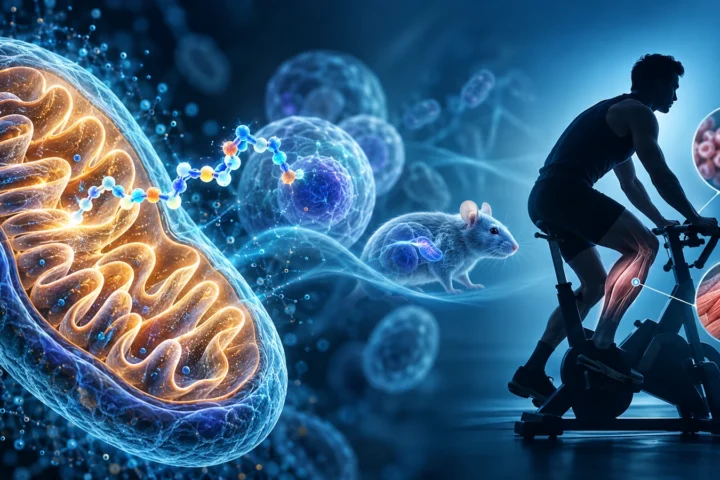
Search results describe KPV as an anti-inflammatory peptide for the gut, skin, wounds, immune regulation, recovery and sometimes almost anything linked to inflammation. The scientific literature does contain interesting results. Human intestinal cell lines show changes in inflammatory signalling. Several mouse colitis models show lower inflammatory measures. A rabbit corneal-injury model reported faster re-epithelialisation.
But the crucial evidence step is missing. In its July 2026 review, the US Food and Drug Administration said it had not identified clinical studies or human exposure data for KPV by any route. The agency also said the potential safety risks in people were unknown.[1,2]
The accurate short answer is therefore: KPV has credible preclinical anti-inflammatory and repair-related signals, especially in experimental intestinal inflammation, but no demonstrated human benefit or established human safety profile.
KPV evidence at a glance
| Popular claim | What the research actually contains | Evidence boundary |
|---|---|---|
| “Gut anti-inflammatory” | Human intestinal cell lines plus several chemically or immunologically induced mouse-colitis models[3,4] | Supports biological activity; does not establish treatment of human IBD |
| “Gut-barrier repair” | Cell assays and engineered KPV-delivery systems in mice[5] | The carrier, model and outcome matter; not proof for plain KPV in people |
| “Wound healing” | Rabbit corneal abrasion and cultured rabbit corneal-cell research[6] | Specific animal tissue model, not human skin-wound evidence |
| “Skin anti-inflammatory” | Keratinocyte signalling research and related KdPT animal/xenograft work[7,8] | KdPT is not KPV; no direct human KPV efficacy trial |
| “Safe because it is small” | KPV has three amino acids, but FDA found no human exposure, immunogenicity or aggregation studies[1,2] | Small size is not a human safety dataset |
| “Clinically proven peptide” | FDA found no KPV clinical studies or human exposure data[1,2] | This claim is unsupported |
What is KPV?
KPV stands for lysine–proline–valine. It is the carboxyl-terminal tripeptide sequence of alpha-melanocyte-stimulating hormone, commonly written as α-MSH(11–13). Researchers became interested in this short sequence because some anti-inflammatory activity associated with the parent hormone appeared to remain in the three-residue fragment.[3,7]
The name can create procurement ambiguity. FDA’s 2026 materials noted that “KPV” is a common name rather than a USAN, INN or IUPAC name and that multiple salts or derivatives, including different active moieties, have been marketed under the same common label.[2]
That means a quotation should not stop at “KPV.” A buyer needs to establish the exact sequence, terminal form, whether the material is free base or acetate, and the mass basis used for the stated amount.
1. The strongest KPV research area: experimental intestinal inflammation
The best-known KPV evidence comes from preclinical gut research.
In a 2008 Gastroenterology paper, Dalmasso and colleagues tested KPV in stimulated human intestinal epithelial cell lines, a human T-cell line and mouse colitis models. In the cell experiments, KPV reduced activation of NF-κB and MAP-kinase inflammatory pathways and reduced pro-inflammatory cytokine secretion. Uptake experiments implicated the peptide transporter PepT1. In DSS- and TNBS-induced mouse colitis, the researchers reported lower inflammatory cytokine expression.[3]
A separate 2008 study tested KPV in two mouse models: DSS colitis and CD45RB-high transfer colitis. KPV-treated animals showed improved weight recovery, lower histological inflammation and reduced colonic myeloperoxidase activity. The study also reported activity in mice with nonfunctional melanocortin-1 receptors, suggesting that the observed effect was at least partly independent of MC1R signalling.[4]
These studies are meaningful because the signal appeared across more than one model and with more than one type of measurement. Yet they remain cell and mouse evidence. Chemically induced colitis in a mouse is not ulcerative colitis in a person, and a change in cytokine expression is not the same as clinical remission.
The phrase “KPV is proven for gut health” therefore overstates the literature. A more defensible sentence is: KPV has shown anti-inflammatory activity in intestinal cell systems and multiple experimental mouse-colitis models.
2. PepT1 is a mechanism—not a clinical guarantee
PepT1 is a transporter for di- and tripeptides. It is normally prominent in the small intestine and can be upregulated in the colon during intestinal inflammation. The 2008 work proposed that PepT1 helped transport KPV into intestinal epithelial and immune cells.[3]
This gives the gut research a coherent mechanism. It also explains why later teams designed nanoparticles and hydrogels intended to deliver KPV to inflamed colon tissue.
But a transporter finding does not prove that every supplied form reaches the same tissue, remains intact or produces the same effect. Sequence, terminal chemistry, salt form, carrier, matrix, route and experimental model can all change what is being tested. Mechanism is a reason to investigate, not permission to skip clinical trials.
3. Why KPV delivery-system studies cannot be read as “plain KPV benefits”
Many newer KPV papers are also drug-delivery papers.
Xiao and colleagues loaded KPV into polymeric nanoparticles functionalised with hyaluronic acid and then embedded the particles in a chitosan/alginate hydrogel. In cell experiments and a DSS mouse-colitis model, the targeted system showed increased uptake, lower inflammatory measures and better mucosal-healing indicators than less-targeted comparison systems.[5]
That result belongs to the HA–KPV nanoparticle/hydrogel system. It cannot be transferred automatically to unformulated KPV powder, a different carrier or another route. The same limitation applies to newer inflammation-responsive conjugates: their performance may depend on the engineered delivery platform as much as on the peptide cargo.
This distinction is often removed in commercial summaries. “A KPV nanocarrier reduced inflammation in mice” becomes “KPV heals the gut.” The shorter sentence is easier to sell and less accurate.
4. What the wound-healing research actually tested
KPV’s most frequently quoted repair result comes from a rabbit corneal-abrasion model—not from a human skin-wound trial.
Bonfiglio and colleagues mechanically removed the corneal epithelium in rabbits and compared KPV-treated eyes with vehicle controls. At 60 hours, all eight KPV-treated corneas were reported as re-epithelialised, compared with none of the eight placebo-treated corneas. The researchers also tested rabbit corneal epithelial cells and investigated a possible nitric-oxide-related mechanism.[6]
This is a clear experimental result, but its scope is narrow:
- the tissue was rabbit cornea;
- the injury was experimentally created;
- the result involved a specific topical research protocol;
- it did not test chronic human skin wounds;
- it did not establish systemic repair, muscle recovery or joint healing.
Using this paper as proof that KPV “heals wounds in people” crosses species, tissue and clinical-context boundaries at once.
5. Skin and psoriasis claims often involve a different peptide: KdPT
Another common evidence error is treating KPV and KdPT as synonyms.
KPV is lysine–proline–valine. KdPT contains D-proline and threonine; it is structurally related but not the same molecule. Published KdPT work includes experimental intestinal-barrier studies, psoriasis-like mouse models, human-skin xenograft models and a randomised phase IIa ulcerative-colitis study.[8–10]
That human KdPT trial is especially easy to misuse because it contains the words “tripeptide,” “randomised,” “multicentre” and “ulcerative colitis.” It does not convert into human evidence for KPV. A one-letter abbreviation difference can represent a different sequence, stereochemistry, pharmacology and development programme.
Direct KPV skin research includes signalling experiments in human keratinocytes, but these are cell experiments rather than clinical benefit studies.[7] The honest summary is not that KPV is disproven for skin. It is that the reviewed literature does not establish direct KPV efficacy in people.
6. What the 2026 FDA review adds
The FDA’s Pharmacy Compounding Advisory Committee materials are unusually useful because they examine the exact gap between online promotion and available evidence.
FDA reported that it searched PubMed, Embase, ClinicalTrials.gov, DailyMed, Drugs@FDA and other sources. It did not identify clinical studies or human exposure data for KPV via any route. It also reported no identified clinical studies evaluating immunogenicity or aggregation and said potential human safety risks were unknown.[1,2]
The agency additionally noted:
- no European Pharmacopoeia or Japanese Pharmacopoeia monograph located for KPV free base or acetate;
- no EMA-authorised product containing those KPV forms identified;
- ambiguity in sources about whether “KPV” meant free base, acetate or another form;
- online promotion for inflammatory conditions, wound healing, skin health and multi-peptide combinations despite the evidence gap.[1]
The absence of adverse-event reports does not prove safety. FDA explicitly warned that reporting systems have limitations and that a lack of reports does not mean a substance lacks toxicity.[2]
An advisory-committee discussion is not an approval. Nor does a committee vote substitute for evidence of clinical benefit, manufacturing quality or regulatory authorisation.
What KPV research does not yet prove
Based on the reviewed sources, KPV has not been shown in controlled human research to:
- treat ulcerative colitis, Crohn’s disease or “leaky gut”;
- heal human skin wounds;
- treat psoriasis, eczema or other inflammatory skin disease;
- improve joint, tendon or muscle recovery;
- reduce systemic inflammation in people;
- provide an established safe exposure range by any route;
- perform like KdPT or an engineered KPV nanoparticle formulation;
- make a multi-peptide blend clinically effective.
“No human evidence found” is not the same as “proven ineffective.” It means efficacy and safety claims remain unconfirmed.
Translating the literature into a B2B KPV specification
KPV’s short sequence does not make its procurement questions disappear. In fact, the FDA’s nomenclature warning makes exact material definition more important.
For a KPV / lysine–proline–valine research-material enquiry, a buyer can request:
- exact sequence and three-letter/one-letter notation;
- terminal form and stated active moiety;
- free-base or salt form, including counter-ion where relevant;
- molecular formula and expected molecular mass for that stated form;
- stated amount per vial and whether it is expressed on peptide, salt or another basis;
- batch or lot identifier;
- identity method and acceptance logic;
- chromatographic purity method and result;
- content or assay information, where available;
- related-substance or residual-solvent scope, where relevant;
- storage and shipment information tied to the quoted material;
- batch-to-document traceability and an independent-verification plan.
A COA should be read by method and measured attribute, not by the size of the purity number. A chromatographic purity result does not automatically establish identity or the amount in a vial. A clinical or animal paper does not validate a supplier batch.
The same caution applies to blends. If KPV appears in a multi-component product, the buyer should define every component, the stated amount of each and whether the label reports individual amounts or only a total. Evidence for one component does not prove a combined effect.
Under MY PEPTIDE Wholesale Terms, each kit contains 10 vials of the same product and the standard MOQ is one kit per peptide. An order may combine one full kit of product A with one full kit of product B, but five vials of A and five of B do not form one kit. Quotations depend on the product, stated amount per vial and quantity.
FAQ
What is KPV peptide?
KPV is the tripeptide lysine–proline–valine and corresponds to the C-terminal α-MSH(11–13) sequence. It is studied mainly for anti-inflammatory signalling in cells and animal models.
What are the main claimed KPV benefits?
The most evidence-supported preclinical area is intestinal inflammation. Repair, skin and antimicrobial claims also appear, but direct human KPV benefit has not been established in the reviewed evidence.
Is there human research on KPV?
FDA stated in its 2026 review that it did not identify clinical studies or human exposure data for KPV by any route.[1,2] Studies of the related tripeptide KdPT should not be presented as KPV trials.
Is KPV proven for ulcerative colitis?
No. KPV has shown activity in intestinal cell systems and mouse-colitis models, but this does not establish efficacy in people with ulcerative colitis.
Does KPV heal wounds?
A rabbit corneal-abrasion study reported faster re-epithelialisation, but this is not proof of healing human skin wounds, joints, tendons or muscles.[6]
Is KPV safe?
Human safety is not established. FDA reported no identified human exposure data and insufficient information to assess potential risks, including immunogenicity-related questions.[1,2]
Are KPV and KdPT the same?
No. They are related tripeptides with different sequences/stereochemistry. KdPT animal and human studies cannot be relabelled as KPV evidence.
Bottom line
KPV is not a molecule without evidence. It has a coherent preclinical story: inflammatory signalling changes in human cell lines, activity across several mouse-colitis models and a repair signal in rabbit cornea. The problem is not that these findings are meaningless. The problem is that commercial summaries often remove the species, tissue, formulation and comparator, then describe the remainder as a human benefit.
The defensible conclusion is more precise: KPV is a biologically active research tripeptide with promising preclinical gut-inflammation and repair signals, but direct human efficacy, exposure and safety evidence has not been established.
For KPV availability, stated forms, kit quantities and batch documentation, contact service@wholesalepeptide.xyz.
References
- US Food and Drug Administration. Pharmacy Compounding Advisory Committee Briefing Document: KPV-Related Bulk Drug Substances (KPV free base and KPV acetate). July 2026. FDA briefing document
- US Food and Drug Administration. July 23–24, 2026 Pharmacy Compounding Advisory Committee Meeting Presentations, KPV section, pp. 64–84. FDA presentation
- Dalmasso G, Charrier-Hisamuddin L, Thu Nguyen HT, et al. PepT1-mediated tripeptide KPV uptake reduces intestinal inflammation. Gastroenterology. 2008;134(1):166–178. doi:10.1053/j.gastro.2007.10.026
- Kannengiesser K, Maaser C, Heidemann J, et al. Melanocortin-derived tripeptide KPV has anti-inflammatory potential in murine models of inflammatory bowel disease. Inflammatory Bowel Diseases. 2008;14(3):324–331. doi:10.1002/ibd.20334
- Xiao B, Xu Z, Viennois E, et al. Orally Targeted Delivery of Tripeptide KPV via Hyaluronic Acid-Functionalized Nanoparticles Efficiently Alleviates Ulcerative Colitis. Molecular Therapy. 2017;25(7):1628–1640. doi:10.1016/j.ymthe.2016.11.020
- Bonfiglio V, Camillieri G, Avitabile T, Leggio GM, Drago F. Effects of the COOH-terminal tripeptide alpha-MSH(11–13) on corneal epithelial wound healing: role of nitric oxide. Experimental Eye Research. 2006;83(6):1366–1372. doi:10.1016/j.exer.2006.07.014
- Elliott RJ, Szabo M, Wagner MJ, Kemp EH, MacNeil S, Haycock JW. Alpha-melanocyte-stimulating hormone, MSH 11–13 KPV and adrenocorticotropic hormone signalling in human keratinocyte cells. Journal of Investigative Dermatology. 2004;122(4):1010–1019. doi:10.1111/j.0022-202X.2004.22404.x
- Bettenworth D, Buyse M, Böhm M, et al. The tripeptide KdPT protects from intestinal inflammation and maintains intestinal barrier function. American Journal of Pathology. 2011;179(3):1230–1242. doi:10.1016/j.ajpath.2011.05.027
- Kokot A, Sindrilaru A, Schiller M, et al. The tripeptide KdPT ameliorates ongoing psoriasis-like skin inflammation in murine and human skin. Experimental Dermatology. 2017;26(9):795–803. PubMed record
- Kucharzik T, Lemmnitz G, Abels C, Maaser C. Tripeptide K(D)PT Is Well Tolerated in Mild-to-moderate Ulcerative Colitis: Results from a Randomized Multicenter Study. Inflammatory Bowel Diseases. 2017;23(2):261–271. doi:10.1097/MIB.0000000000001000
This article is provided for supplier evaluation, research education, and business communication. It is not medical advice and does not provide dosage or treatment instructions.
Need supplier information for your business?
Discuss product availability, documentation, wholesale requirements, and shipping communication with our team.